The onset of the COVID-19 pandemic has spelled financial trouble for many businesses in downtown Winston Salem. One market that has not struggled, both in Winston-Salem and across the South, is the residential real estate market. The pandemic has posed challenges for those who manage apartment buildings downtown.
Property manager Amy Creason oversees Winston Factory Lofts, a set of buildings that originally housed the P.H. Hanes Company from 1916 to 1951 in three separate buildings, one of which was razed in the mid-60s. Clachan Properties bought Phase 1 of the lofts, located at 675 N Main St. in 2006 and Phase 2, located at 101 E Sixth St, in 2008. They now house 171 one-, two-, and three- bedroom apartments. They include an outdoor pool, two large fitness centers with weights and other equipment, two lounge areas with fireplaces and pool tables, and other amenities. They are recognized by the City of Winston Salem as Historic Landmarks but have been updated architecturally to accommodate residential apartments.
Creason says it’s a struggle to tell people they need to pay their rents when they have just lost their jobs. “You have to work with residents to try to come up with a plan,” says Creason. “Waiving late fees and waiving any sort of fees we can to try to keep the balance small.”
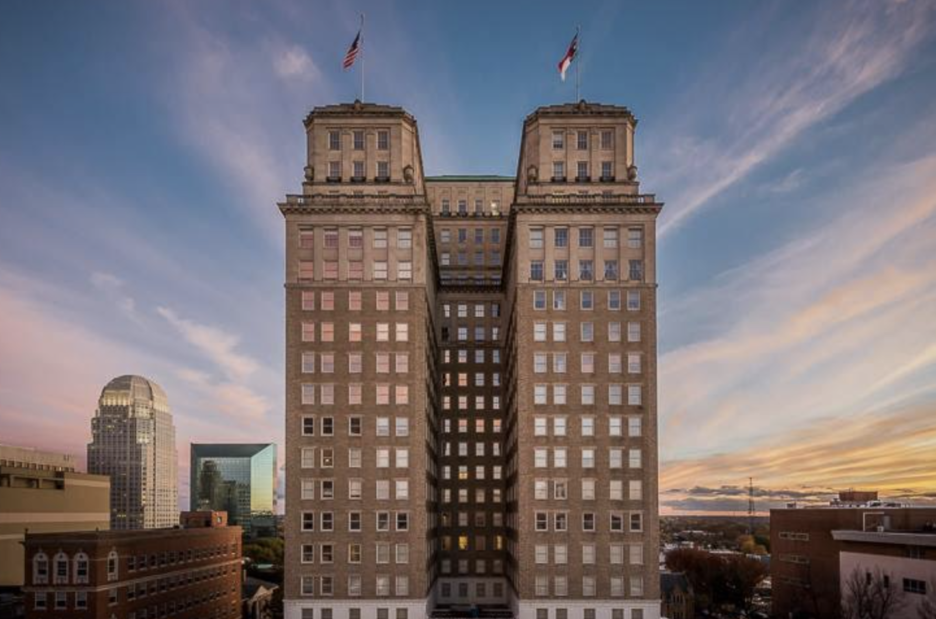
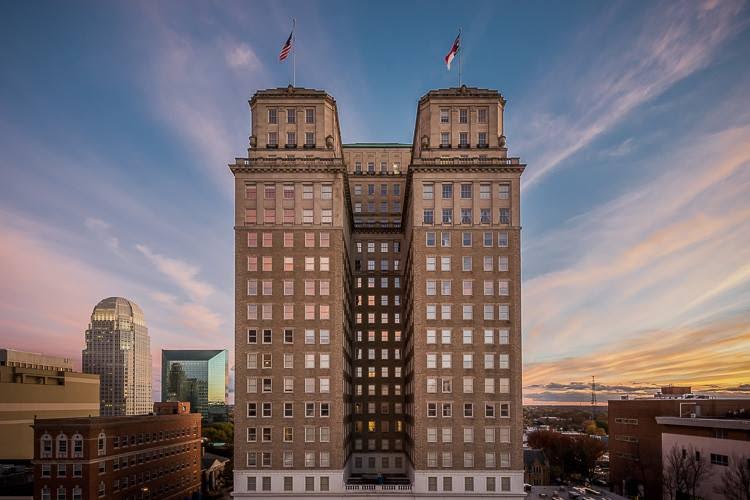
Suzy Baxter is a property manager for PMC Property Group which owns several downtown apartment buildings, such as the Nissen Building Apartments located at 310 W Fourth St., 757 North Apartments at 757 N Chestnut St., and The Residences at the R.J. Reynolds Building at 51 E Fourth St., which was once the headquarters for R.J Reynolds Tobacco Company and also houses the Kimpton Cardinal Hotel. Each building has state of the art fitness centers as well as lounge game rooms with ping pong and pool tables, firepits, and entertainment spaces. Baxter is the property manager for the Nissen Building Apartments, which was built in 1927 and contains 145 units.
Baxter has also had to come up with payment plans for her tenants. While these types of plans will vary according to the resident’s particular needs, Baxter said that tenants will basically pay what they can for that month, and the balance will be spread out over a certain period of time. According to Baxter, residents and their property managers will come up with a written agreement that allows residents to pay half a month’s rent at one time. The other half will be spread out over a period of several months, so their rent will be higher than usual in the following months as they pay off what they owe. “So it’s not like you get free rent because you are going to have to end up ultimately paying it,” says Baxter.
While most tenants have been able to pay rent on time, a handful have not, creating more vacancies than in normal times, Baxter and Creason said. “Usually apartments do not sit vacant for more than 15-30 days at the most and we’ve definitely had some apartments that have sat vacant for longer than that,” said Creason. “So trying to find that right price point to get that apartment rented has been a challenge.”
Tenants moved out during the pandemic for other reasons.
“We did see a few people leave because they didn’t want to live in a building sharing space with others, and this was an ideal time to buy where the prices were escalated but mortgage rates were low. So we lost a few residents to buying homes,” says Baxter. An increased number of people working or taking classes from home has also led people to either move to their beach and lake houses or move back in with their parents.
The pandemic is also bringing new people in.
“The whole other flip side is everyone being in New York, D.C., Philadelphia, they don’t want to live and pay rent up there when they have to work from home. So they are getting out of their leases and moving to the South where it’s warmer. We’ve moved in a lot of people from New York,” explains Baxter. Additionally, a lot of people are taking advantage of how hot the residential real estate market is right now. “They are moving into the rental and recouping their great sale on their home until the market drops and then they’ll buy something at a lower price. You also see people moving into here and renovating their homes,” Baxter observes.
Changing COVID-19 restrictions issued by the CDC has also brought the challenge of keeping tenants safe, but also keeping them happy. “That has been a challenge because you want to do what is right to keep COVID as minimal as possible but you are also telling people, ‘Hey, you can’t use the gym, you can’t use the lounge, you can’t have any guests.’ “ Creason said. “You are telling people things they can’t do when they are already in a situation where they are feeling trapped and can’t do a lot anyway.”
At the beginning of the pandemic, gyms and common areas had to shut down completely. As of February 26th, gyms are allowed to operate at 50% capacity as long as individuals can stay 6-feet apart and wear face coverings, according to the North Carolina Department of Health and Human Services. A mask must be worn in all public spaces, and indoor gatherings are limited to 25 people.
There have also been issues with residents following mask protocols, and both Baxter and Creason are in the difficult position of holding people accountable. “This [wearing a mask] has caused some issues for people, and some fights quite frankly amongst residents that we have had to squash,” Creason said “Everyone feels differently about being asked to follow rules in their own home.”
For Baxter, challenges arise between the different age populations in the building. “We have a really wide-age demographic, from eighteen years old to nineties, so it does get taxing with maybe the young people that didn’t feel the need to wear a mask, but then I have elderly residents, and you really need to be in a mask when getting from the front door to the elevator,” said Baxter. “It’s those anti-maskers where it gets hard.”
Although both Baxter and Creason have felt the strains of the pandemic in varying ways, they recognize that the situation could be much worse. “We’ve been in my opinion very lucky. I’ve been thankful that the hit from COVID wasn’t greater to us than we thought it would be,” says Creason.
Reporting:
Amy Creason, Regional Manager for Clachan Properties
Tel: (804) 380 0813
amy@clachanproperties.com
Suzy Baxter, Property Manager for PMC Properties
Tel: (336) 300 2607
