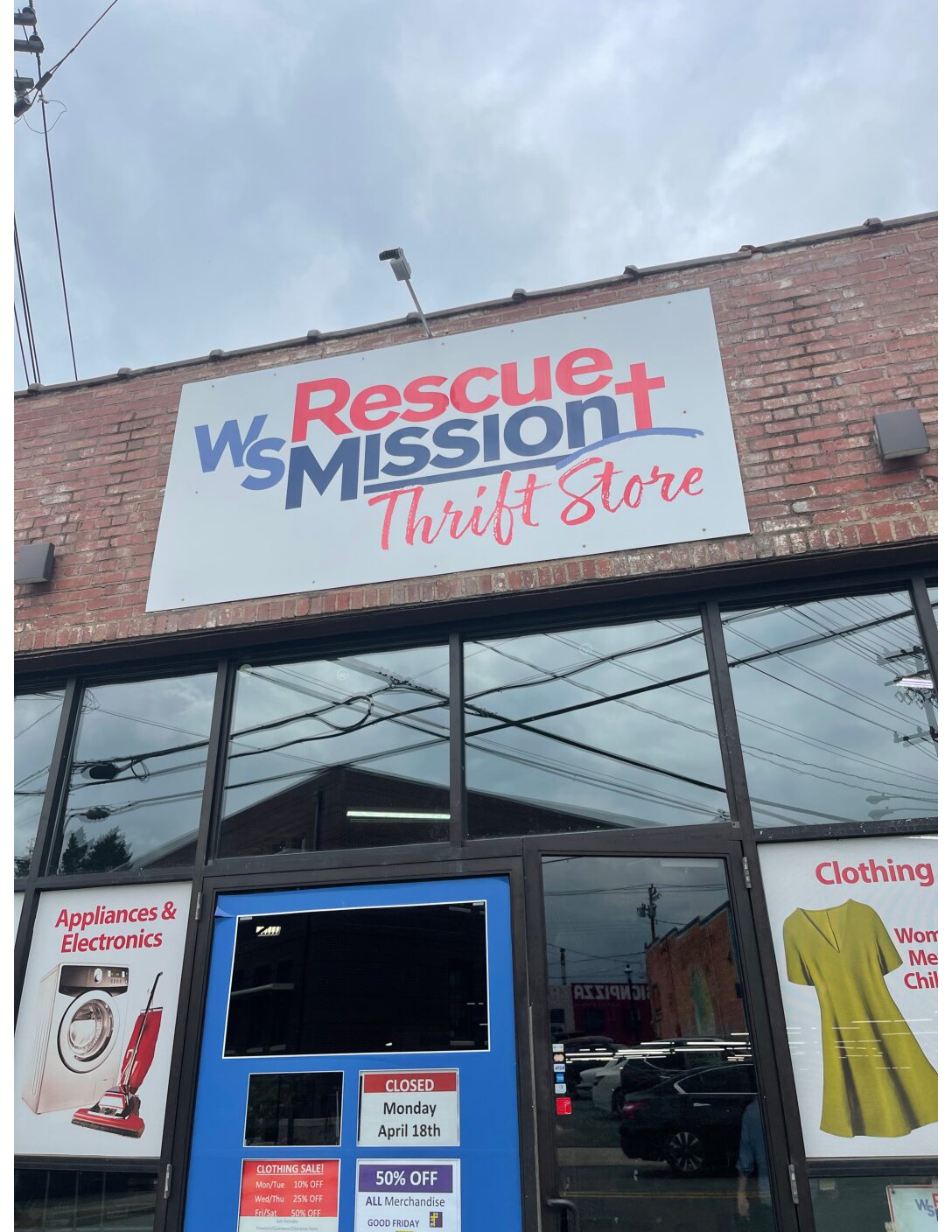
Cars fill the parking lot beside the Rescue Mission thrift store, its entrance marked by an oversized sign. The door opens with a welcoming jingle to signal the arrival of the next customer.
Couches, carpets, mugs and glassware, and endless racks of clothing fill the large warehouse space. Each item is labeled with the price and each rack is organized by category, from work clothes, athletic attire, undergarments, shoes, and purses. The store is unique among second-hand stores downtown, frequented by customers from all walks of life, whether that be college students looking for one-off items for their costume party, parents buying winter coats, or a customer looking for bargain homeware.
“We depend on word-of-mouth,” Laurie Andary, assistant manager of the store said. “I make sure the shop runs smoothly and that items get from our donation bins onto the shelves for sale as efficiently as possible.” These bins sit by the front entrance,easily accessible to donors.
Andary believes in the importance of building relationships. “We interact with three different communities: those who donate, those who shop and those who pray.” Her goal, too, is to ensure that whether a shopper is coming into the store for appliances, shoes, work clothes, or a small trinket, anyone should feel welcome, regardless of their personal circumstances.
“We never want people to feel ashamed coming into our shop.” She gave the example of an individual who came in one day to buy appliances, and then came in another weekend “just because they want something like a pocketbook or keychain,” as a gift for themselves. The Rescue Mission prides itself on ensuring comfort for their broad clientele.
Unlike other second-hand stores Downtown, the thrift store itself supports their larger Rescue Mission organization that provides life-changing services to their clients. These include programs for recovering addicts, meal and community religious outreach programs, clothing drives, and medical and dental assistance. Andary believes that the Rescue Mission is the only, “one stop shop” in the area.
Customer Averice Hicks called the store “a staple to her community,” and prefers to shop there over other competing second-hand shops in town because “it is the least expensive spot with the highest quality items.” While sifting through racks of skirts and button down shirts, Hicks explained that she spends around $100 per month on clothes at the Rescue Mission.
“I work around here and need a uniform for my job, so I’ll come to the rescue mission once a week to buy my professional attire.” Hicks also said the alluring aspect of thrifting, explaining that “thrifting isn’t for just one type of person. You see people from all walks of life come in here.” She believes that the thrill of panning through racks of clothing in hopes of finding a single item can be an “exciting” and enjoyable activity for everyone.
Andary seconded this notion, saying that some customers shop at second hand shops out of necessity and others shop for leisure. From Andary’s perspective, though, she believes that “this line sort of draws itself,” explaining that students who come into their shop are “not collectors,” and that they are looking for more fashion items, including scarves or vintage tops, and not necessarily “a winter coat for the season ahead.”

